

Discover the best tourist places to visit in Kutch, Rann of Kutch, Mandvi Beach, Dholavira & more. Plan your Kutch trip with our travel guide for sightseeing, culture & festivals.
This website is created only to provide information about tourist places of Kutch. We do not offer or take any bookings. If you find any incorrect information, please contact us
Our Contact
- info@visitkutch.com
Kutch Handicrafts and Shopping Guide – What to Buy & Where
Visit Kutch
The Soul of Kutch Lies in Its Crafts
Kutch is not just a land of deserts and festivals; it’s a living canvas of art and tradition. Every village here tells a story through its crafts, be it the vibrant embroidery, intricate wood carvings, or handwoven textiles.
Shopping in Kutch is more than buying souvenirs; it’s about experiencing the skill, patience, and creativity of artisans who have preserved these crafts for generations. From Bhuj’s local markets to the artisan villages like Bhujodi and Ajrakhpur, Kutch offers a shopping experience deeply connected with its culture.
Let’s explore the most famous handicrafts of Kutch and the best places where you can buy them directly from the artists.
1. Ajrakh Block Printing – The Art of Natural Colors
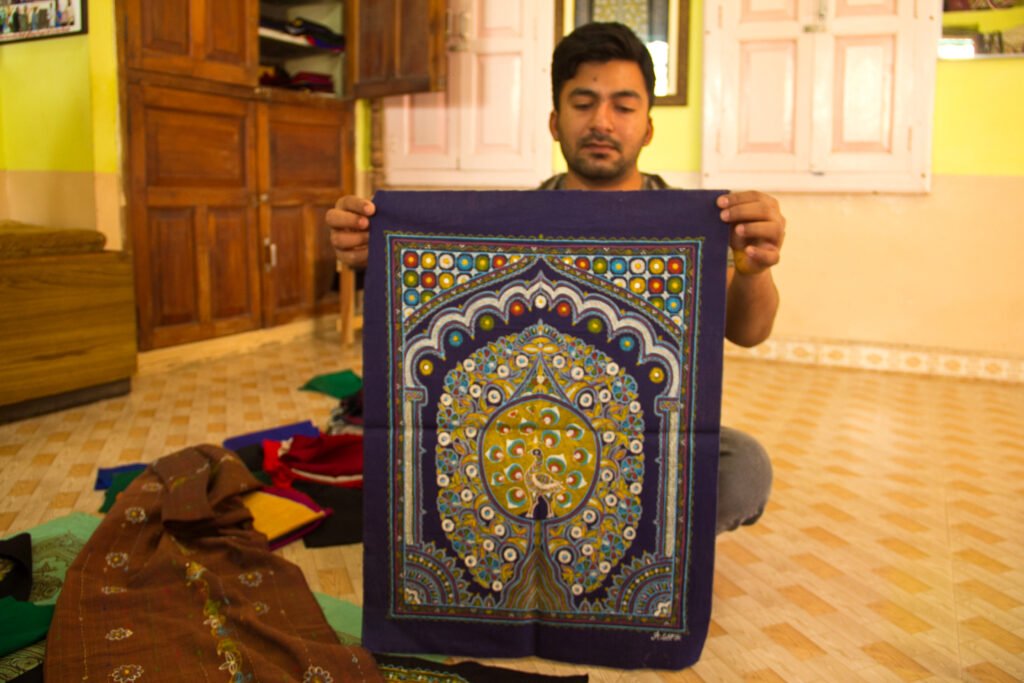
The ancient art of Ajrakh block printing is one of Kutch’s proudest traditions. This 400-year-old technique uses natural dyes like indigo, madder root, and turmeric to create geometric patterns on cotton and silk fabrics.
The process involves over a dozen steps of washing, dyeing, and printing, all done by hand. The result is a beautifully patterned fabric known for its rich earthy tones and timeless appeal.
Where to Buy: Visit Ajrakhpur Village, located about 15 km from Bhuj. Here, you can watch artisans at work and buy directly from families who have been printing for generations.
What to Buy: Sarees, scarves, bedsheets, and stoles with traditional Ajrakh motifs.
2. Kutch Embroidery – A Stitch of Tradition
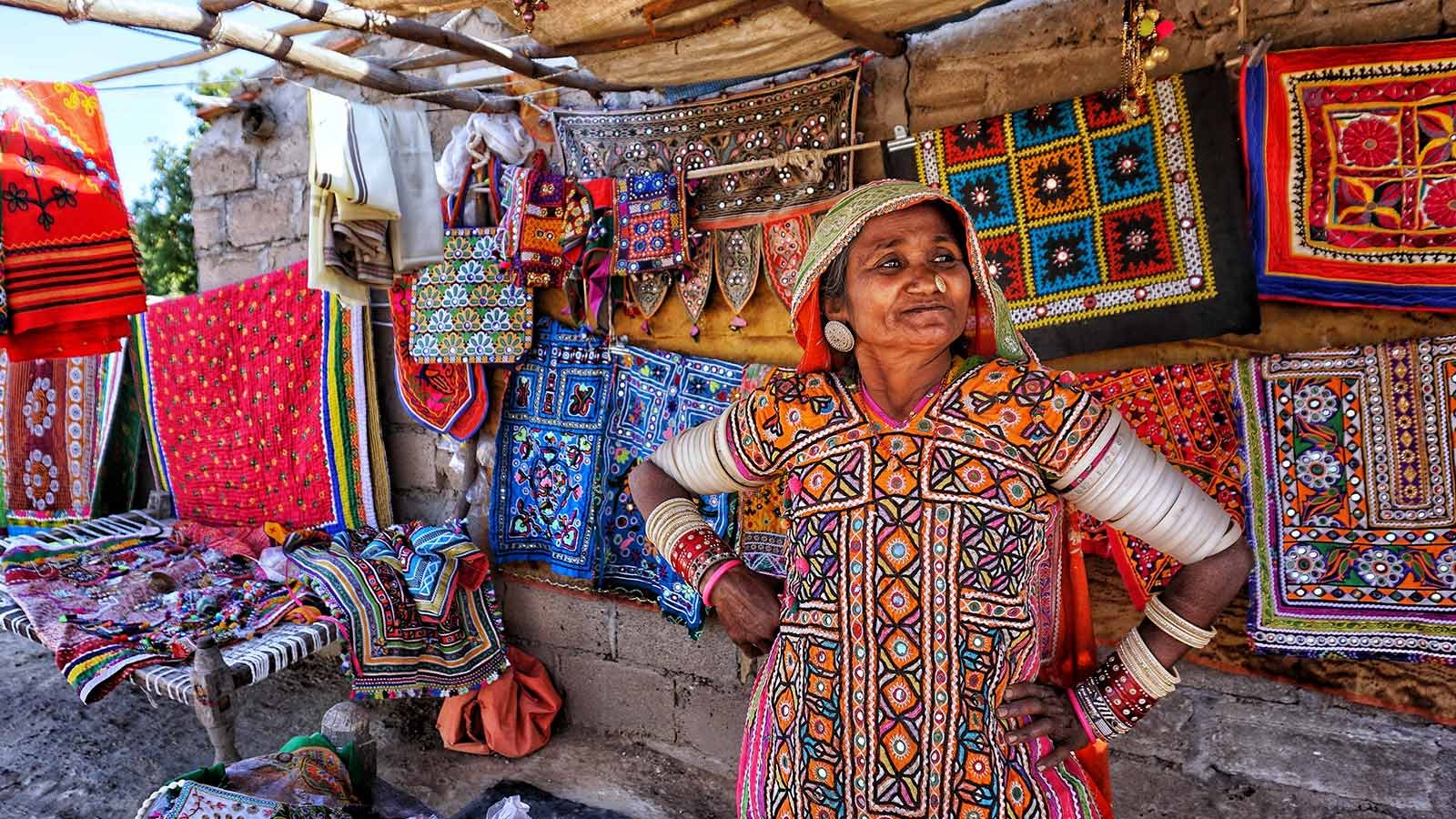
Kutch embroidery is world-famous for its vibrant colors, mirror work, and detailed patterns. Each community in Kutch has its unique embroidery style, Rabari, Ahir, Sodha, and Mutwa, each reflecting its identity and culture.
Women spend weeks or even months creating each piece, often using the same stitches passed down from their ancestors. These embroidered items are popular among designers across India and abroad.
Where to Buy:
Bhujodi Village – Visit local craft cooperatives and women’s self-help groups.
Hodka and Ludiya Villages – Known for intricate Rabari embroidery and mirror work.
Shroff Bazaar, Bhuj – Ideal for small souvenirs and decorative items.
What to Buy: Embroidered wall hangings, cushion covers, handbags, and garments.
Rogan Art is one of the rarest forms of painting in the world, practiced by only one family in Nirona Village near Bhuj. The technique uses a paste made from castor oil and natural pigments, applied with a metal stylus to create fine, symmetrical designs.
This art once faced extinction but is now globally recognized; even the Prime Minister of India gifted a Rogan painting to global leaders.
Where to Buy: Visit the Khatri family workshop in Nirona. Watching them work is an unforgettable experience.
What to Buy: Hand-painted wall art, sarees, and tablecloths.
4. Leather Craft – Utility Meets Style
Kutch’s leather craft is as practical as it is beautiful. Local artisans use camel and goat leather to make everything from footwear to home décor. The products are often hand-stitched and decorated with embroidery, mirrors, and beadwork.
The quality and detailing make them unique and durable, a perfect blend of tradition and modern utility.
Where to Buy:
Sumerasar Village near Bhuj, known for handmade leather accessories.
Bhujodi Craft Park for ready-to-buy products.
What to Buy: Handbags, wallets, belts, and traditional footwear (mojris).
5. Metal Bell Art – The Music of the Desert
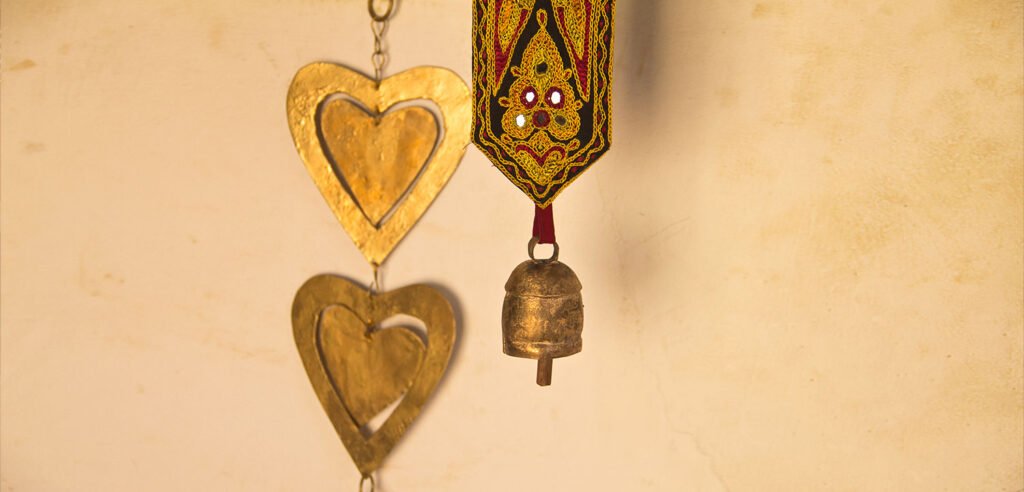
One of the most distinctive sounds of Kutch comes from the bell-making villages. Originally crafted for cattle identification, these handmade bells are now beautiful décor items.
Artisans heat and hammer iron sheets, coat them with copper, and tune each bell to create a unique sound. No two bells sound the same, each is individually tuned by ear.
Where to Buy: Nirona Village is also home to traditional bell makers. You can watch the process and buy directly from the craftsmen.
What to Buy: Wind chimes, decorative bells, and garden hangings.
6. Handloom Weaving – The Pride of Bhujodi
The weavers of Bhujodi Village are known for creating handwoven shawls, stoles, and blankets using natural cotton and wool. Each piece is woven on a traditional loom and often includes traditional motifs inspired by the desert lifestyle.
These weavers, known as the Vankars, have kept this heritage alive despite modern machine-made competition.
Where to Buy:
-
Bhujodi Craft Village (8 km from Bhuj) – You can meet the weavers, watch the process, and buy authentic handmade textiles.
-
Hiralaxmi Craft Park – A government-supported center where artisans display their best work.
What to Buy: Handwoven shawls, throws, scarves, and jackets.
7. Best Markets for Shopping in Kutch
If you want a mix of all crafts in one place, here are the top shopping spots:
-
Bhuj Haat Market: Great for souvenirs and local handmade items.
-
Rann Utsav Craft Bazaar (Dhordo): Seasonal market featuring hundreds of artisans from across Kutch.
-
Hiralaxmi Craft Park (Bhujodi): A permanent display and sales center for rural craftsmen.
-
Anjar and Mandvi Markets: Good for metalwork, pottery, and everyday crafts.
8. Tips for Authentic Shopping in Kutch
-
Buy Directly from Artisans: It supports their livelihood and ensures fair prices.
-
Look for GI Tags or Cooperative Labels: It confirms authenticity.
-
Avoid Bargaining Excessively: Handcrafted work deserves respect for the time invested.
-
Carry Cash: Some villages may not have card or UPI facilities.
-
Ask Before Taking Photos: Always respect local customs and privacy.
Conclusion: Take Home a Piece of Kutch
Every craft in Kutch is a reflection of its people, their creativity, patience, and love for color. Whether it’s the handwoven shawls of Bhujodi, the Ajrakh prints of Ajrakhpur, or the rare Rogan paintings of Nirona, each item carries the spirit of this desert land.
When you shop in Kutch, you don’t just buy an object; you take home a piece of history, culture, and craftsmanship that defines this incredible region.
So, on your next trip, go beyond sightseeing and explore the vibrant world of Kutch handicrafts and shopping, where every stitch, print, and brushstroke tells a story worth cherishing.